
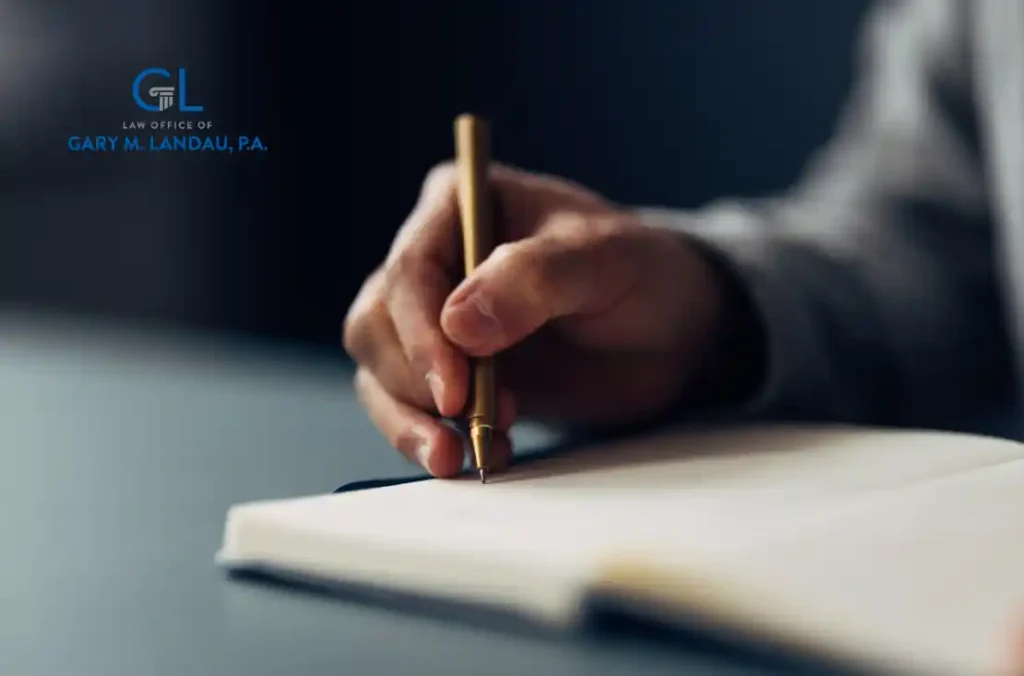
Our law firm often encounters clients who emotionally reveal that a relative who recently passed away intended to draft a formal will but never got around to it. Then, during a surprise hospitalization following an accident or sudden illness, when they knew their condition had worsened, they hastily scrawled their wishes on a piece of paper.
Such handwritten wills are known as holographic wills. Generally the person sitting in our office holding this paper names them as a beneficiary of the estate. Which is why they are eager to know, “Are holographic wills legal in Florida?”
In some instances, holographic wills can be legal in Florida. But generally a will scribbled on someone’s deathbed lacks the strict requirements state law demands for a will to be valid. This is the case no matter how sincere or clear the writer’s intentions may have been.
What is a Holographic Will?
As a Coral Springs will lawyer, we do sometimes see holographic wills, handwritten and signed by the testator (the person making the will). People generally create these wills when they have run out of time to draft a proper last will and testament with the help of an experienced law firm. Sometimes these wills are written on a napkin or other repurposed piece of paper the person had handy at the time.
There are states that more readily accept these handwritten, holographic wills, because their criteria for what makes a valid will is broader than Florida’s.
By contrast, Florida law lays out several requirements that wills have to meet in order to be valid. Failing to meet any one renders the document inadmissible to the probate court.
What are the Requirements for a Will to be Valid in Florida?
Per Florida Statute 732.502, a will must meet these requirements to be legally valid:
- The Testator’s Age – The person creating the will must be at least 18 years old or be a legally emancipated minor.
- The Testator’s Capacity and Signature – The testator must be of sound mind. They must sign the document willingly or direct someone else to sign it in their presence if they cannot.
- Two Witnesses – The will must be signed in the presence of at least two competent witnesses, who must also sign the will in the presence of the testator and in the presence of each other. None of the witnesses can be beneficiaries of the estate.
- Written Form – The will must be in writing. While this does include handwritten wills, it must comply with the other formal requirements to be valid, especially as it pertains to the two witnesses.
Without each one of these elements, the will won’t be accepted by the Florida probate court. In that case, the deceased person will be treated as if they died without a will, and their assets are be distributed according to Florida intestate law.
(See What happens if someone dies without a will in Florida?)
Why Doesn’t Florida Generally Recognize Holographic Wills?
Holographic wills typically fail to meet the statutory requirements laid out above because they often lack the signatures of witnesses. These witnesses are confirming that they watched the testator sign the will without duress, fraud, or undue influence. None of the witnesses can be beneficiaries of the estate–who tend to be the close relatives surrounding a person on their deathbed.
Witnesses are an important element of the official process that supports the testator’s intent. Courts view these witnesses as indispensable, because without them there is much potential for dispute. This is why the witness requirement is clearly spelled out in the law.
How Can I Create a Legally Valid Last Will and Testament?
Problems with holographic wills are another reason people shouldn’t wait until they’re on their deathbed to create their will. And since no one knows when an accident or sudden illness might strike, everyone should make the time to draft a legally valid will, ideally working with an attorney experienced in the fields of wills, estate planning, and probate.
Every adult should have a will, but they are especially important when you have minor children, a change in life circumstance, or don’t want a close relative to inherit your assets, as they will by law if you die without a valid will.
(See Three situations where creating a will in Florida is an absolute must.)
A properly drafted Florida will gives you reassurance that the document will move through the probate process properly, giving you peace of mind that your wishes for your assets after your death will be honored by the court.
Here are important ways to draft a legally valid will and to keep it up to date:
- Work with an experienced wills and probate attorney – A knowledgeable attorney can help you draft a will that complies with Florida’s law, reducing the likelihood of disputes among family members, especially those who might not inherit personal property according to the instructions in the will.
- Create a will for each adult – Married couples need two separate wills, one for each person. There is no such thing as a joint will.
- Review your will regularly – Major life changes, including your marriage, divorce, the birth of a child, or the death of your beneficiary or personal representative (the person charged with overseeing the probate) often require changes to a will. Examine your will every few years as well as after any of these major events to be sure it remains aligned with your wishes and circumstances.
- Execute the will properly – An experienced attorney will make sure the will complies with all requirements, especially that it is signed and witnessed by two individuals. Although not a strict requirement, attorneys generally have the witnesses also sign an additional document, called a self-proving affidavit, that is legally notarized (meaning a notary has witnessed their signature). Without this additional affidavit, the probate court will need to locate the witnesses after the person has passed to confirm they indeed watched the testator sign the will.
- Store your will safely – It is imperative that you keep the original copy of your will in a secure place. This can be in the will vault in your attorney’s office or in a secure, fireproof box or filing cabinet in your home. It’s also a good idea to make copies of the will and distribute them to your beneficiaries. Should the original be lost, there is a court process by which a copy can be legally validated. Never store your will in your bank’s safe deposit box. These boxes are extremely hard for heirs to access after your death.
The LAW OFFICE OF GARY M. LANDAU, P.A.: Your Estate & Trusts Attorney Serving Coral Springs, Parkland, and All of South Florida
Health emergencies can happen, and at that time you’ll wish you had drafted a legally valid will, since we’ve learned that scribbling your wishes in a holographic will likely won’t be accepted as valid. By working with an estate planning attorney, you can create a will that both reflects your desires and passes legal scrutiny.
Have you been searching online for a “will attorney near me?” With more than 25 years of experience in our practice areas and countless satisfied clients, Gary M. Landau and his team are uniquely positioned to help you with your probate and real estate needs in Coral Springs, Parkland, and throughout Florida. Whether you’re ready to probate a loved one’s estate or to write your own will, or if you are purchasing a home, have inherited a home, or want a closing agent to handle title insurance and all documents for your closing or refinancing, the LAW OFFICE OF GARY M. LANDAU, P.A. is ready to work with you.
Call our office at (954) 979-6566 or complete our online form today to schedule a free consultation. We work with our clients in person, over the phone, or on Zoom.
Copyright © 2025. LAW OFFICE OF GARY M. LANDAU, P.A. All rights reserved.
The information in this blog post (“post”) is provided for general informational purposes only and may not reflect the current law in your jurisdiction.
LAW OFFICE OF GARY M. LANDAU, P.A.
7401 Wiles Road, Suite 204
Coral Springs, FL 33067
(954) 979-6566
https://garylandau.com/